Training on Bad Sleep: What the Data Says for Lifters
One rough night won't sink your lifts, but chronic short sleep quietly raises effort, cuts endurance and blunts recovery. Here's how to train around it.
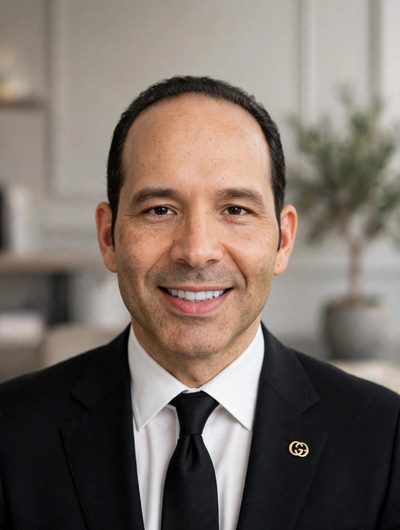 Renan Filho · Founder & Tech Builder · Atualizado em 12/09/2026 · VitalStack
Yes — a single bad night barely affects maximal strength, so you can usually train, just with slightly lighter loads and no max attempts. The real cost comes from chronic short sleep: it raises perceived effort, cuts endurance, dropped testosterone 10-15% after one week of five-hour nights in a JAMA study, and shifts weight loss from fat toward muscle. Train technically clean when tired and protect 7-9 hours as your baseline.
A bad night rarely changes what's on the bar tomorrow. The research is more specific than gym folklore: one short night nudges maximal strength by a few percent at most, while endurance, perceived effort and recovery absorb the real damage. Over weeks, that gap compounds. This is the practical companion to our data deep-dive — what to actually do on the gym floor.
What the data actually shows
Start with the acute picture. A 2022 systematic review and meta-analysis in Sports Medicine pooled laboratory trials of acute sleep loss and found performance declined overall — but unevenly. Sustained aerobic tasks suffered most; short maximal strength efforts were among the most resilient. In individual trials, one night of four to five hours of sleep typically moves one-rep-max or peak force by roughly 0-5%, while time to exhaustion can drop by double digits. Classic deprivation studies from the 1980s found the same split: near-normal maximal strength, sharply reduced endurance.
The chronic picture is less forgiving. In a 2011 JAMA study, one week of five-hour nights cut daytime testosterone in young men by 10-15% — a decline comparable to roughly a decade of aging. Testosterone is not a magic lever, but it supports recovery and muscle maintenance, and a sustained double-digit dip is a poor backdrop for hard training.
Body composition shifts too. In a 2010 trial in Annals of Internal Medicine, dieters slept either 5.5 or 8.5 hours under identical calorie deficits. The short sleepers lost the same total weight — but 55% less of it came from fat, and more came from lean mass. Hunger signaling moved the wrong way as well.
Recovery chemistry runs on sleep. According to the NIH's National Heart, Lung, and Blood Institute, a large share of daily growth hormone release is packed into deep sleep early in the night, and chronic short sleep is tied to impaired recovery, metabolic problems and higher accident risk.
None of this is exotic. CDC surveillance estimates about one in three US adults sleeps under seven hours; the NHS advises most adults need seven to nine. Short sleep is the default condition of the people reading this article.
Why it matters for your training
If you are new to lifting, sleep touches three things you are actively trying to build:
- Skill acquisition. A squat, hinge or press is a motor skill, and motor learning consolidates during sleep. Short nights slow the exact process that makes technique automatic.
- Effort perception. After restricted sleep, the same load scores higher on rating of perceived exertion. You are not always weaker — the work simply feels heavier, which still changes how many hard sets you finish.
- Recovery economics. One controlled trial found post-exercise muscle protein synthesis fell by roughly 20% after a single sleepless night. A 2014 study of adolescent athletes linked sleeping under eight hours with about 1.7 times more injuries.
There is also a safety angle: fatigue degrades bar path and timing late in sets, precisely where beginners are least equipped to self-rescue.
A practical decision rule
- Under ~5 hours: keep the appointment, but drop intensity — technique work at 60-70% of your usual load, stopping 3-4 reps shy of failure — or take a full rest day without guilt.
- 5-7 hours: train as planned. Expect the session to feel about one RPE point harder; cut load roughly 5% if bar speed or form slips.
- 7+ hours: ignore the noise and train normally.
- Never attempt one-rep maxes or true failure sets on less than about six hours of sleep.
- Nap if you can. A 20-90 minute nap before training partially offsets a short night in studies of athletes.
- Caffeine, within limits. It blunts sleepiness but not lost coordination or recovery; keep it before early afternoon so it doesn't steal tonight's sleep.
Our editorial take: for a beginner, showing up matters more than the load on the bar in the first months. The habit is the adaptation. A deliberately lighter session protects that habit while respecting the physiology.
The honest counterargument
Skeptics make a fair point. Many dramatic findings come from total sleep deprivation — 24 hours or more awake — which is not "you slept five hours." And when researchers control for motivation, strength decrements after one bad night shrink; part of the effect is willingness, not muscle. On current evidence, a 45-minute session after six hours of sleep is unlikely to cost you measurable strength.
The response: that reading is correct for a single session and wrong as a policy. Training results are cumulative. Blunted protein synthesis, a 10-15% testosterone dip, worse fat-versus-muscle partitioning in a deficit and elevated injury odds do their damage across weeks, not hours. The practical synthesis: treat one bad night as noise; treat a bad month as a signal to fix sleep before adding volume.
FAQ
Should I lift weights after a bad night's sleep?
Usually yes. With five or more hours of sleep, train with slightly reduced load and stop short of failure; below that, switch to technique work or rest.
Does lack of sleep affect muscle growth?
Chronic restriction does. Trials show lower post-exercise muscle protein synthesis after sleep loss, and dieters sleeping 5.5 hours lost 55% less fat and more lean mass than those sleeping 8.5 hours.
Is an extra hour of sleep better than an early workout?
If you are consistently under seven hours, the extra hour usually pays back more than the extra set. You can shorten a session; you cannot shorten recovery.
Bottom line: sleep is not a substitute for training, and training is not a substitute for sleep. The data says you can lift through an occasional bad night — lower the stakes, skip the max attempts, and protect the seven-to-nine-hour baseline the rest of the time.
FAQ
Should I lift weights after a bad night's sleep?
Yes, usually — with five or more hours of sleep, train with slightly reduced load, stop short of failure and skip max attempts; below five hours, do technique work or rest.
Does lack of sleep affect muscle growth?
Chronic restriction does: trials show lower post-exercise muscle protein synthesis after sleep loss, and dieters sleeping 5.5 hours lost 55% less fat and more lean mass than those sleeping 8.5 hours.
Is it better to sleep an extra hour or train early?
If you are consistently under seven hours, the extra hour usually pays back more than the extra set — you can shorten a session, but you cannot shorten recovery.
Fontes / Sources
Especialista em Tecnologia e IA com 12 anos de experiência criando e gerindo empresas. Criador de fintechs e plataformas digitais que unem tecnologia, dados e inteligência artificial para gerar valor real.